
Airbnbs and Beyond: A Deepdive on Short-Term Rentals
Quick Navigation Links
This article is part of our series on residential real estate investment. Check out “Real Estate Investment: A Beginner’s Guide” to learn more about other forms of real estate investment..
Whether you currently own a home or are looking to buy one, you might have considered turning part or all of your property into an Airbnb, officially known as a short-term rental. Short-term rentals have become an increasingly popular way for homeowners to offset their mortgages or earn extra income, especially in tourist destinations like here in Nashville.
If you’re thinking about starting a short-term rental business, whether in your spare bedroom or a new investment property, there’s a lot to consider before diving in. We researched local rules, regulations, and statistics, and we spoke with the owners of two Airbnbs to get a first-hand perspective on running a successful short-term rental.
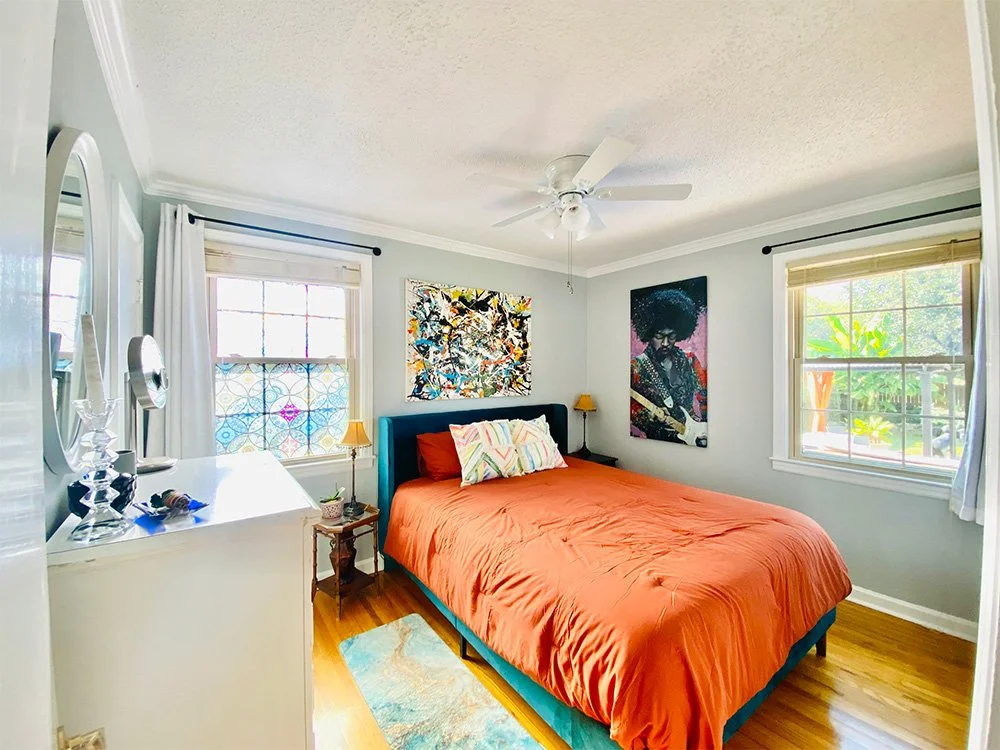
One of three bedrooms at the Healthy Living Hideaway in East Nashville.
Meet the Owners
Meet the amazing Airbnb owner-operators we spoke with: Mary Marie Goines & Logan Crowell, who operate the Healthy Living Hideaway, an Urban Ayurveda Retreat, and Susan, who rents a newly renovated private apartment attached to her home. Both Mary & Logan and Susan are Superhosts, meaning their rentals have been highly rated across multiple stays with very few cancellations. Basically, they’re good at what they do.
Both Airbnbs are considered owner-occupied and operated, meaning that Mary, Logan, and Susan share their homes with their rental units and handle the day-to-day management themselves. Despite the surface similarities, Mary & Logan and Susan have two different, successful approaches to running an Airbnb.
Already running a coaching business centered around holistic health, Mary and Logan saw operating a short-term rental as another way to connect with people:
“We both have been in the service and hospitality industry for many years and just love creating special experiences for people. We run a local holistic health coaching business, Nashville Ayurveda, that teaches people how to design their lives for optimal health and fulfillment.
“We had the vision to create a space for people to come and reconnect with themselves while learning and experiencing simple, holistic health practices. This is what we are focusing our Airbnb experience around. We also love to travel, so it's nice to share the beautiful home and outdoor space we have cultivated over the years. Our home is truly a sanctuary for healing and rejuvenation. It's an honor to be able to allow others to experience the abundance of nature that is in our backyard and neighborhood. It gives people a place to relax, reset, and recharge.”
While they had this vision in mind while house-hunting, it wasn’t the deciding factor in their purchase.
“When looking for a home to purchase, the thought of running a short-term rental was on our mind, but it wasn't a large deciding factor for us,” Mary explains. “We thought it would be really nice, though, if it had that capability.”
Susan wasn’t aware of short-term rentals when she made her home purchase, but did have renting in mind:
“[…] I was looking for a place I could easily rent a part of to a long-term renter for additional income. The house I found fit the bill perfectly.”
“After a few difficult long-term renters and a change in lifestyle, I decided to try short-term renting. I figured, at least guests aren't really around long enough to cause as many problems.“
A Brief History of Short-Term Rentals
In the US, “Airbnb” is often used interchangeably with the term “short-term rental,” but vacation rentals have a history that stretches back much further than the advent of the now-famous website. In Europe, people have been sharing their second homes with friends and family since at least the 1800s. Of course, this meant you had to already have a relationship with someone well-off enough to own a second home if you wanted to enjoy a vacation rental.
In the 1950s, the first listings for vacation rentals appeared in American newspapers. The owners of private vacation houses seized the opportunity to make money off their second homes rather than letting them sit vacant when they weren’t there. In 1995, VRBO (an acronym for Vacation Rentals By Owner) brought these listings to the internet.
It wasn’t until 2008 that Airbnb appeared on the scene. While initially launched as a platform for people looking to rent out individual rooms in their homes to budget travelers, the company has since grown to fill a similar role to VRBO.
By 2015, the short-term rental market was worth around $85 million USD, and the rentals weren’t just private homes and spare bedrooms. Over the last two decades, investors have taken vacation rentals from side hustles to business empires, purchasing buildings with the sole intention of renting them out on platforms like Airbnb. Some investors have built portfolios with multiple vacation rentals, making hundreds of thousands of dollars (or more) every year.
All Shapes and Sizes
Short-term rentals now include much more than unused vacation homes and spare bedrooms. Today, rentals range from campsites to downtown apartments to whole houses. In a city like Nashville with high demand, a spare bedroom can become a moneymaking venture. Most guests prefer a degree of privacy, so a private bathroom and separate entrance can go a long way towards making your extra space desirable to guests.
The most popular short-term rentals are whole-home rentals. These include both condos and single-family houses, and are especially appealing to families and large groups. You don’t need to buy a second home to rent out a whole house. Some hosts will stay in a basement apartment or separate living space on their own property and allow guests to take over the rest of the house for the weekend.
Mary and Logan approach their short-term rental exactly this way. While they’re often traveling during guest bookings, the duo installed a shower in their basement apartment to create a comfortable place to stay while hosting.
While whole-home rentals still dominate the market, “unique stays” are an increasingly popular option. A unique stay is a rental in either an unusual accommodation, a unique location, or that’s in some way experiential. The most popular forms of unique stays are tiny homes and farm stays, but the category includes everything from treehouses to camper trailers to private islands.
Regardless of the shape or size of your rental, making sure guests have easy access to amenities is key to success. Amenities can be anything from high-speed internet to a pool to laundry machines to a beautiful backyard.
“One of the most impactful things we have done for our Airbnb is investing in our backyard plants,” explains Mary. “We love to garden, and the guests really enjoy how relaxing it is to be among the plants. They attract so many birds, butterflies, and animals, which adds to the peaceful nature of the place.”
Making a list of things you would or wouldn’t want in a rental is a good place to start when considering what amenities to include in a vacation rental. Susan used her personal travel experiences when deciding how to prepare her space for guests.
“I just decorated to begin with to make it minimal, modern, and stylish with absolutely no clutter,” says Susan. “I've stayed in lots of places as a touring musician, and I was much more likely to leave things behind when the space was full of stuff. A year ago, it was renovated again, but the minimal spirit was kept.”
Amenities can also include things outside your property, like major tourist attractions, airports, or an amazing view. This doesn’t mean you have to be in the heart of the city or directly overlooking a scenic vista, but location does matter and is the one thing you can’t change about your property once you’ve purchased it.
Both Mary's and Susan’s short-term rentals are located in a quiet part of Inglewood in East Nashville. Despite feeling removed from the bustle and noise of downtown, both properties are within twenty minutes of both Broadway and the airport, and only moments from Riverside Village, Five Points, and Opry Mills. This gives guests the best of both worlds: a peaceful escape from the easily accessible excitement of Music City.
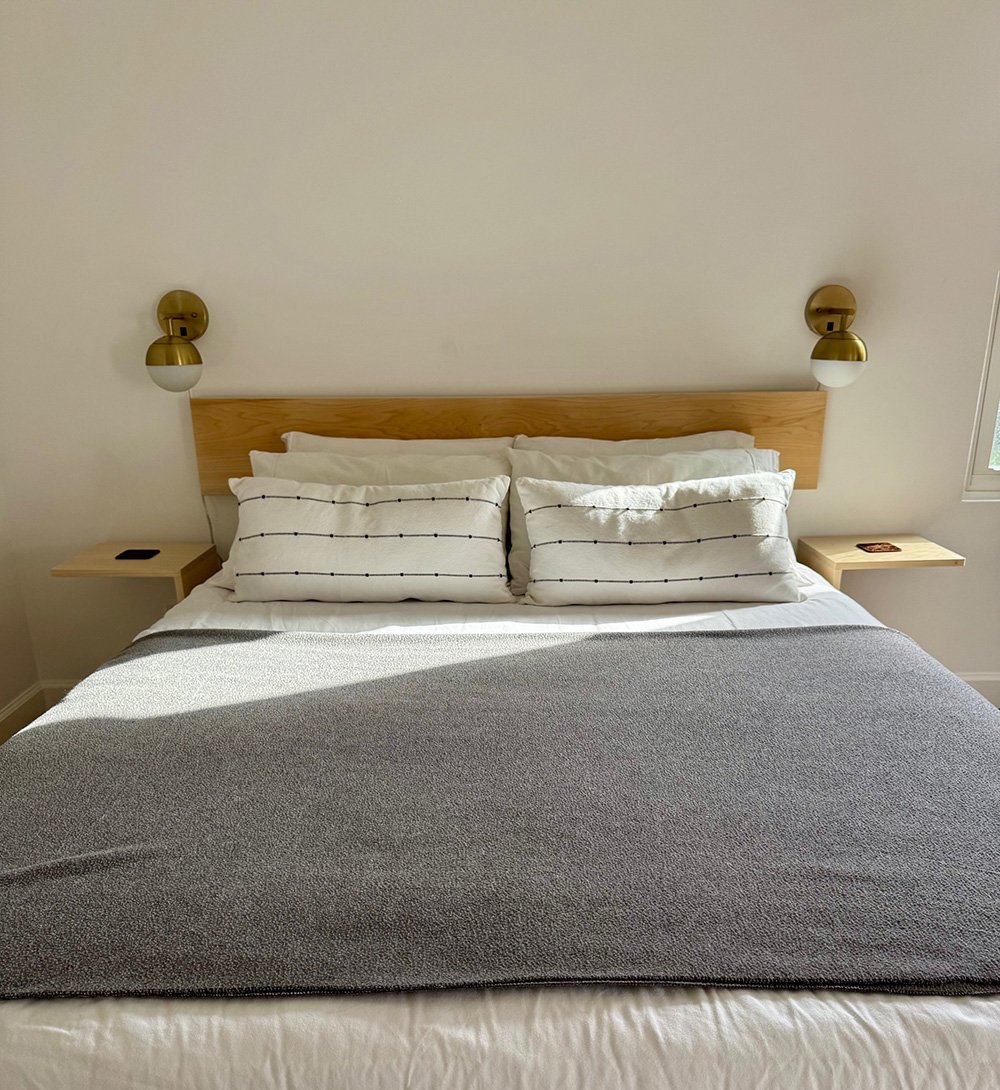
Susan’s minimalist and cozy rental.
To Owner-Occupy or Not?
While historically vacation rentals were second homes, the advent of Airbnb has opened up the market to owner-occupied rentals. If you’re looking to invest in a short-term rental, one of the first and most important choices you’ll have to make is whether you’ll be a non-owner occupier or an owner occupier, renting out part of your primary residence. This choice will impact everything from your financing to insurance costs to your rental occupancy rate.
Owner-Occupying
Owner-occupied properties come with major financial benefits. Mortgages for primary residences require smaller down payments and have lower interest rates than loans for second homes or commercial properties. As an added bonus, you’ll only have to pay a mortgage on a single property rather than paying separate financing for your home and rental property. Insurers also see owner-occupied properties as a safer investment and are more likely to offer coverage.
In Nashville, owner-occupied rentals are far easier to get permitted. Rules vary from county to county and town to town, but in Davidson County, Airbnbs are required to get permits. At the time of writing, there are no zoning restrictions on owner-occupied rentals, while non-owner-occupied permits are limited to commercial and downtown zoned districts. While the requirements listed on the Metro Nashville website look complicated, both of the owner-occupiers we spoke with found the permitting process to be easy.
Sharing your home with a short-term rental does come with challenges, one of which is finding the right guests. All kinds of people visit Nashville for all kinds of reasons, but a significant proportion come to party; depending on your lifestyle, you might not want to share your space with a rowdy crowd. A carefully crafted listing description can help connect you with the right guests and navigate disputes when they arise.
Mary explains:
“Our Airbnb is the Healthy Living Hideaway, an Urban Ayurveda Retreat. So we want to attract people who are looking for a health-focused, rejuvenating environment… but we have had people not even read our listing description, only look at our photos, then book because they see we have a pool. Focusing on your listing description and writing it for your ideal guest is so important in our opinion. Some people still might not read it, but at least you can point back to it if there are any misalignments in expectations between you and guests.”
“I don't think it's for everyone,” shares Mary. “Having people in and out of your home can energetically take a toll on you and your home. So we put a lot of attention on cultivating it in a way that provides us balance and peace. It's not just about money and running as many people through as possible.”
Mary and Logan also shared the unexpected challenge of guests bringing scented products into their home. The duo uses unscented, non-toxic products throughout their home as part of their commitment to creating a healthy and environmentally-friendly space. Unfortunately, they can’t stop guests from spraying perfume or using scented fabric softeners, the odors from which linger long after the vacationers have headed home.
It’s not all bad news, however.
“We have enjoyed it for the most part and have met some amazing people,” Mary says. “It has helped us really stay on top of caring for our home. I think many people put off doing maintenance and upkeep around their house and yard due to the mindset, 'I'll get to it later'. Doing the short-term rental encourages us to always see how we can make improvements to enhance our guests' experiences. It also creates a more beautiful home for us to enjoy.”
Non-Owner-Occupying
Non-owner-occupied properties are short-term rentals that are not located in your primary residence. These rentals are popular with guests, but they do come with challenges.
The first and most difficult hurdle to get around is financing. Second homes require larger down payments (minimum 20%) and higher interest rates. They also do not qualify for many of the tax incentives available to traditional homebuyers. If you sell your rental property down the line, you’ll have to pay capital gains on the proceeds.
Non-owner-occupied properties can also be difficult or more expensive to insure. Most insurance companies see these houses as a greater risk than an owner-occupied home. If the house experiences a water leak while vacant, for example, it may not be noticed until extensive damage has been done. The concern is doubled when the property is being used as a short-term rental.
Permitting can be another problem. Nashville has placed strict limits on where new non-owner-occupied rentals can be located. At the time of writing, permits are only being offered for properties located in commercial and downtown zoning districts. Permits are non-transferable, so purchasing an existing Airbnb won’t allow you to circumvent these restrictions. That said, Airbtics.com estimates that around 90% of Nashville Airbnbs are operating unpermitted, and nearby towns and counties have more lenient rules.
Despite these barriers, non-owner-occupied properties come with a major benefit: privacy for you and your guests. As a property owner, it’s easier to treat your rental as passive income, and the distance insulates you from what everyone we spoke to called the biggest downside of Airbnb ownership: bad guests. For guests, having the property to themselves can make it easier to relax and unwind.
With the popularity of whole-home rentals, a non-owner-occupied property is likely to have a higher occupancy rate than a home share. But it’s important to make sure the added costs that come with owning a second property are worth the potential for added income.
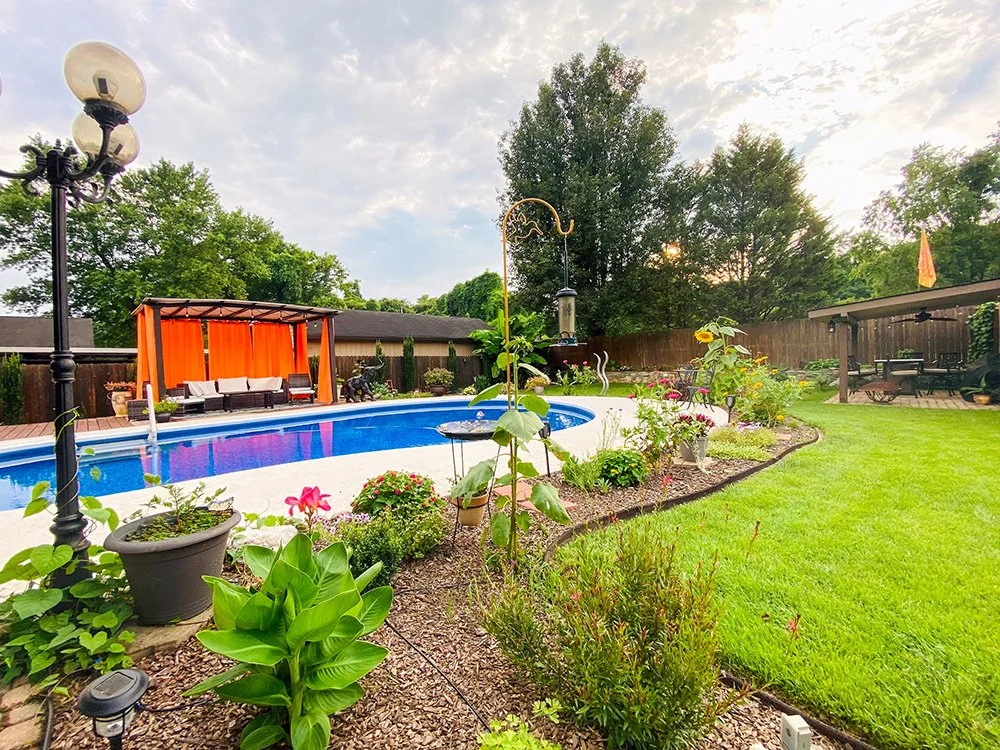
The relaxing backyard at the Healthy Living Hideaway.
Daily Operations
Taxes, Permitting, and Insurance
Let’s dig a little deeper into the nitty gritty of short-term rentals as a real estate business venture, starting with insurance. If you’re taking out a mortgage to purchase your new property, you’ll need to provide proof of insurance before the bank will underwrite your loan. Regardless of whether or not you plan to owner-occupy, your insurer will want to know if part or all of the property will be used for short-term rentals. While some insurers may add a surcharge or increased fees to cover the added risk, others may not cover your property at all.
With the potential for added cost and frustration that comes with getting insurance for a short-term rental, it may be tempting to just not tell your insurer about your Airbnb, but this can prove to be an expensive mistake. If your insurer discovers that you’ve been using the property for vacation rentals, they may deny any claims you make (even if they have nothing to do with your rental business) or may even cancel your policy.
You may also want additional insurance beyond your homeowner’s policy. Most homeowner’s policies don’t provide coverage for damage caused by short-term rental guests. This means that, if, for example, a guest floods your bathroom, you’ll be on the hook for the full cost of water mitigation and repairs. While some states require owners to carry additional short-term rental insurance, Tennessee only requires owners to show $1 million in liability coverage, whether that’s a special rental policy or your homeowner’s policy. Whether or not you want to pay for added protection is up to you.
Multiple companies offer short-term rental insurance, including Airbnb. Anecdotally, hosts have been less than thrilled with the coverage provided by Airbnb. We recommend doing your research, including reading customer reviews, before choosing a short-term rental policy.
In addition to property and income tax, short-term rentals have additional state and local tax obligations. In Nashville, vacation rentals must also pay room, occupancy, and sales taxes. This comes to a total tax burden of 15.25% of your nightly rate, including any additional guest charges, such as cleaning fees.
The good news is that Airbnb will automatically collect and remit these taxes to the appropriate places if you decide to rent through their platform. However, property and income taxes are still the rental owner’s responsibility.
Finally, we’ll briefly touch on permitting. Short-term rentals are required to have permits in Nashville, which cost $313 at the time of writing. Both owner-occupied and non-owner-occupied have similar requirements. You’ll need to:
provide proof that you’re up to date on your property taxes
provide proof of liability insurance
provide evidence that you notified your adjacent neighbors
provide contact info for you and your homeowners association (if you have one)
get an inspection from the fire marshal
provide a floor plan that includes the location of all smoke detectors
provide a notarized affidavit that all of the information you’ve provided is true.
Mary and Logan found the floor plan to be the most challenging part of what they said was an otherwise easy process:
“The hardest part was getting the floor plan drawn and just setting up smoke alarms that are all linked together throughout the house. But those weren't that difficult.”
If you’re an owner-occupier, you’ll also have to provide proof of residence. With so many people attempting to falsely claim owner-occupier status to get around permitting restrictions, Metro Nashville is now requiring four different forms of proof of address.
Rather than proof of residence, non-owner-occupiers have to provide a chain of ownership if the property is owned by an LLC or trust.
To learn more about Nashville’s permitting requirements and locate any forms or guides, visit the Short-Term Rental page on nashville.gov.
As mentioned in our section on non-owner-occupying, Nashville is currently only offering permits in a very limited area of the city. If you’re planning to purchase a residential home or apartment outside of downtown to use as a non-owner-occupied Airbnb, you will not be able to get a permit.
If you decide not to get a permit and get caught, you’ll be subject to a $50 fine for each day you operated unpermitted. For example, if you ran your Airbnb without a permit and were caught after 90 days, you would be on the hook for $4,500 in fines. Despite this, an estimated 90% of Nashville short-term rental operators have chosen to take the risk.
Management
Operating a short-term rental requires a lot of day-to-day work. The unit needs to be cleaned thoroughly but efficiently between guests, linens and towels need to be laundered, and amenities need to be restocked, in addition to regular maintenance. A property with a high occupancy rate may only have a few hours for turnover between guests. For some short-term rental owners, this is a challenge they’re ready and willing to take on. But, for others hoping for more passive income, a management company is the best option.
Management companies can handle the majority of day-to-day labor and marketing for your short-term rental. Most won’t provide major home maintenance or regular lawn care, but they should alert you if something needs attention.
Having a team of professionals handling guest turnover and marketing can make owning an Airbnb more of a passive income source rather than a second job, but it does come at a price. Management companies charge between 20% and 25% percent of your gross revenue. If you already have slim profit margins after other expenses, a management company may be cost-prohibitive. If you’re an owner-occupier, it also means more strangers coming in and out of your home.
Neither Mary and Logan nor Susan work with management companies. Susan explained her reasoning:
“I've run businesses all my life, and if you can do it yourself, you always should. No one is going to take care of your business as well as you will. That also allows me to keep the pricing competitive because my overheads are really low. My other work schedule was purposely fit around the ability to be free to clean the apartment in between guests.”
Mary had a similar experience:
“We were surprised by how hard it was to find a high-quality cleaner and a management company. We actually tried a few different cleaners to help, but have ultimately landed on just doing it ourselves. We just haven't found the right person who really has the eye for detail like we do. Cleanliness is critical, and we just haven't found the right person to fully trust with that aspect of it.”
It Helps to Be a People-Person
Both the Airbnb operators we spoke to shared that guests were both the most challenging and best part of owning a short-term rental. Especially if you’re an owner-occupier, a bad guest can cause serious problems. One of the best ways to avoid conflicts is to make sure all of your expectations are clearly laid out in your listing description.
“The most challenging part is problem guests,” shares Susan. “But as you get more experienced, you can tweak your listing to mitigate some of those issues. For instance, I had a couple of occasions where guests tried to sneak in a 3rd person (extra guests are a big no no). So now, throughout my listing description, it's much clearer it's for 2 people. Overall, only about 3% of guests have caused me issues, so they are in a very small minority.”
Despite the occasional conflict, both Mary and Susan said that meeting guests was their favorite part of operating an Airbnb.
“I've met some amazing people throughout the 7 years I've been hosting,” says Susan. “And even some neighbors, too, when their family needed a place to stay.”
Mary and Logan, who incorporate their Ayurvedic practice into their short-term rental business, shared a similar sentiment:
“Our favorite part of owning a short-term rental is creating a special, memorable experience for people. More than ever, people are stressed and overwhelmed with life. We really enjoy cultivating a space where people can get away, unplug, connect with nature, and still be close to world-class dining, music, and other events. We have exciting plans to integrate Ayurvedic cooking classes and weekend Ayurvedic retreats this coming year. We'll be teaching people how to easily begin implementing nature-based principles to bring more health and balance to their lives.”
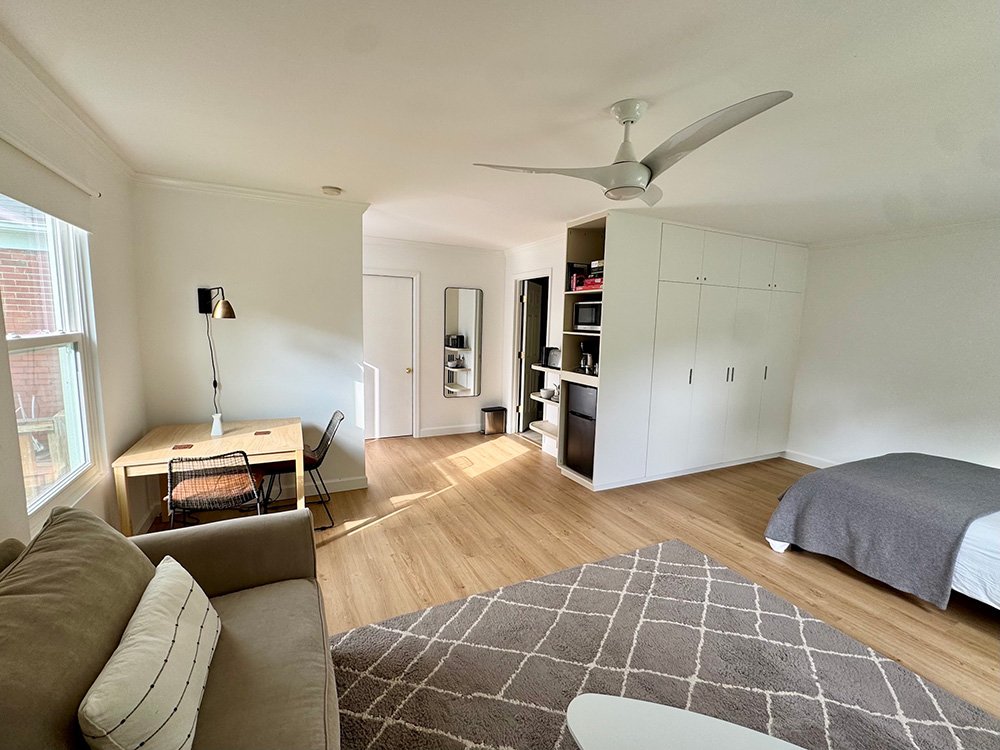
Susan’s serene Airbnb.
Are Short-Term Rentals Still a Good Investment?
At the end of 2025, Airbnbs are still proving to be profitable investments in Nashville, but it really depends on your resources and how you approach your new venture.
First, the positives. Nashville’s overall Airbnb market continues to have a high average occupancy rate and average monthly gross earnings of $3,377 and annual gross income around $40,000, according to Airbtics.com. Music City is a popular destination for domestic tourists and attracts more than just country fans; multiple colleges and major hospitals attract students, parents, and traveling nurses, all in need of a place to stay.
Now, for the negatives. Nashville is no longer the low-cost city it was a decade or so ago.
“Years ago, the Nashville market was very different, and the price between a 2-bed house and three three-bed house on my street was only about $20,000,” Susan explains. “So buying extra house to partially rent wasn't so much of a risk. Now, it's around $120,000, so a massive investment if you want to do it, and probably not a risk I would have taken in today's market.”
Her assessment is spot on. According to Construction Coverage, Nashville's median home prices increased by 136.5% between 2014 and 2024. When coupled with high interest rates, insurance, and general upkeep, your profit margins may be slim or wiped out altogether. Remember, those average earnings are gross income, meaning they don’t account for expenses. It’s worth doing a thorough cost-benefit analysis before purchasing a property to make sure your expenses (including saving for larger repairs down the line) don’t exceed your estimated gross profit.
It’s also important to keep in mind that those average earnings are just that: average. Whether your rental meets or exceeds that average income depends on where it is, what it looks like, and how you run it. An apartment in downtown or a cabin in a scenic spot are more likely to draw visitors than a house in a suburban neighborhood far from any attractions. Those averages also don’t account for the number of bedrooms, averaging the income from one-bedroom home shares with eight-bedroom whole-house rentals.
This isn’t to say that renting a room in your home can’t be a great source of revenue. Susan shared that her successful one-bedroom Airbnb has been a stabilizing source of income.
“It's not my primary income, but it's more expensive as a single person living alone, so the rental is basically like having a partner that helps with the bills and upkeep of the house.”
While Nashville’s overall regulations are lax in comparison to many other major cities, it’s not quite the wild west. You still need a permit and, at the time of publication, Metro Nashville is not issuing new non-owner-occupied permits for properties zoned for single- or multi-family residential. Permits are also non-transferable, meaning that even if you purchase an existing Airbnb, you won’t be able to continue operating it as an STR.
Not that this stops many people. As we mentioned earlier, only 10% of current Airbnb listings in Nashville are permitted. When a website says Nashville has very little short-term rental regulation, what they actually mean is that the city has very little enforcement. Unless a host or their guests become a nuisance to their neighbors (which some quite famously have), they’re unlikely to get a visit from the Metro Codes Department.
In short, as with any purchase or major life change, it’s important to do a thorough cost-benefit analysis before taking the plunge. If you’re ready to put in the effort, running a short-term rental can be a great, fulfilling way to supplement your income.
Ready to Start Your Rental Business?
If you are looking to buy your next property or sell your current one, reach out to us here at Nashville Real Estate Rockstars and we’ll help make it happen for you with maximum ease.